
Almost every seller we talk to in Scranton and the surrounding counties asks some version of the same question: do I have to tell a buyer about that? The basement that takes on water every spring. The knob-and-tube wiring in the attic. The hairline stair-step crack in the block wall that a neighbor said was "just the mines settling." And the follow-up question is usually, "What if I sell it as-is — doesn't that cover me?"
The honest answer is that Pennsylvania has one of the more seller-friendly disclosure regimes in the country, but it is not a free pass, and "as-is" does far less legal work than most people think. This guide walks through what the law actually requires, what the disclosure form covers, who is genuinely exempt, and the handful of Northeast Pennsylvania–specific items that sellers here forget more than any others.
"As-is" is a repair-and-pricing term, not a legal shield. It tells the buyer you won't be fixing anything or negotiating a repair credit. It does not erase your obligation to disclose material defects you already know about — and in Pennsylvania, concealing a known defect can support a fraud or misrepresentation claim no matter what the contract says. The good news: disclosing costs you far less than hiding.
What Pennsylvania's Disclosure Law Actually Requires
The governing statute is the Real Estate Seller Disclosure Law, found at 68 Pa.C.S. § 7301 and the sections that follow. Its core rule is short and worth reading slowly: a seller who intends to transfer an interest in residential real property must disclose to the buyer any material defects known to the seller, by completing all applicable items on a property disclosure statement, and must deliver that signed statement to the buyer before the agreement of sale is signed — not at closing, not after inspections.
Two words in that sentence carry nearly all the weight.
- "Known." Pennsylvania does not require you to investigate. You are not obligated to hire an engineer, open a wall, or run a radon test you never intended to run. You are obligated to be truthful about what you actually know. "Unknown" is a legitimate answer on the form when it is honest — and a dangerous one when it isn't.
- "Material." A material defect is generally understood as a problem with the property, or a portion of it, that would have a significant adverse impact on its value, or that involves an unreasonable risk to people on the property. A dated kitchen is not a material defect. A foundation that moves is.
That "known, not discovered" framing is what makes Pennsylvania comparatively seller-friendly. You are being asked to be honest, not omniscient. Where sellers get into trouble is the gap between those two — describing a recurring problem as a one-time event, or answering "no" to a question they know the true answer to.
The 17 Areas the Disclosure Form Covers
The contents of the statement are set by regulation at 49 Pa. Code § 35.335a, and the form your agent or title company hands you tracks it closely. It runs through seventeen subject areas:
| Area | What It Asks About |
|---|---|
| Seller's expertise & occupancy | Whether you're a contractor or agent, and how long you've actually lived there |
| Roof | Age, leaks, repairs, layers of shingles |
| Basements & crawl spaces | Water infiltration, sump pumps, dampness |
| Termites & wood-destroying insects | Infestation, damage, treatment history |
| Structural items | Movement, cracking, bowing walls, prior repairs |
| Additions & remodeling | Whether work was permitted and inspected |
| Water & sewage | Drinking water source, sewer vs. septic, problems |
| Plumbing, heating, A/C, electrical | System types, age, known defects |
| Equipment & appliances | What conveys and whether it works |
| Land, soils, drainage, boundaries | Settling, subsidence, sinkholes, flooding, encroachments |
| Hazardous substances | Underground tanks, asbestos, radon, lead paint, PCBs, UFFI |
| Condos & HOAs | Fees, assessments, governing documents |
| Stormwater facilities | Basins, swales, maintenance obligations |
| Miscellaneous | Liens, legal claims, insurance history, anything else material |
Two of those deserve a flag for older housing stock. The additions and remodeling section asks whether prior work was permitted — and a surprising number of NEPA homes carry a finished basement, an enclosed porch, or a rewired kitchen that never saw a permit. The miscellaneous section is a genuine catch-all, and it is where an unresolved municipal citation or an unpaid water lien belongs.
The disclosure statement is not a warranty and it is not an inspection report. You are describing what you know, not certifying the house is sound. Buyers still get their own inspection — and in an as-is sale, they should. If you want to see how condition affects the number rather than the paperwork, our breakdown of how cash buyers calculate offers in NEPA walks through the repair math line by line.
Does Selling "As-Is" Get You Out of It?
No — and this is the single most common misunderstanding we encounter.
An as-is clause is a statement about obligations to repair. It tells the buyer: the price reflects the condition, I am not fixing anything, and I am not entertaining a repair credit after the inspection. That is a completely legitimate, extremely common way to sell a house, and for a lot of Scranton-area properties it is the only sensible way to sell one. You can sell your Scranton house as-is without doing a thing to it.
What the clause does not do is convert a known defect into a secret you're entitled to keep. Pennsylvania courts have consistently held that a seller who conceals or affirmatively misrepresents a known material defect can face a claim for fraud or misrepresentation, and an as-is clause in the agreement of sale does not immunize that conduct. The practical rule is simple: as-is protects you from having to fix it, not from having to mention it.
The pattern that generates lawsuits is almost never "the house had problems." It's "the seller answered no to a question where the true answer was yes." A buyer who is told about chronic basement water and buys anyway has no complaint. A buyer who finds a freshly painted-over water line and a "no" on the form has one. Disclosure is what turns a defect into the buyer's risk instead of yours.
There is also a straightforward business case for disclosing early. A defect revealed up front is priced into the offer once. A defect discovered during due diligence becomes a renegotiation, a delay, or a collapsed deal — and if it surfaces after closing, it becomes a phone call from someone's attorney. If you're weighing whether to fix things first or sell them as they stand, our post on selling as-is versus renovating first in Scranton runs the actual net-proceeds comparison.
Who Is Actually Exempt — Estates, Foreclosures, Divorce
The law does carve out a list of transactions it doesn't apply to, set out at 68 Pa.C.S. § 7302. The exclusions most relevant to sellers around here include:
- Transfers by a fiduciary in the course of administering a decedent's estate, guardianship, conservatorship, or trust — the executor or administrator situation.
- Court-ordered transfers and transfers made pursuant to a court-ordered sale.
- Foreclosure-related transfers, including a transfer to a lender that acquires the property through foreclosure or a deed in lieu.
- Transfers between co-owners, and transfers to a spouse or to lineal family members.
- New construction that has never been occupied.
Now the important qualifier, because this is where well-meaning sellers get bad advice: being excluded from the statutory form does not extinguish Pennsylvania's separate common-law duty not to conceal a known material defect. The exclusion says you don't have to complete that particular document. It does not say you may lie about the house.
In practice, that distinction bites hardest for executors. If you inherited a property you never lived in and genuinely don't know its history, the exclusion is doing real work for you — you have very little to disclose because you know very little. But if you grew up in that house, or you've been maintaining it for two years since your mother passed, you know things, and you should say them. Many estate representatives complete the form voluntarily and write "unknown" wherever that's the truth, which is both honest and protective. Our guide to selling an inherited house in Scranton covers the probate mechanics that run alongside this, and you can see how a complicated estate purchase actually plays out on our probate and lien double-property project in Wilkes-Barre.
Divorce and foreclosure sellers are in a similar position. A transfer between spouses is excluded, but a sale of the marital home to a third party generally isn't — see our selling during a divorce in Scranton page for how that interacts with equitable distribution. And if you're selling ahead of a sheriff's sale, the exclusion applies to the lender's transfer, not to your own sale to a buyer; our Pennsylvania foreclosure process guide lays out the timeline.
Worried a Defect Will Kill Your Sale?
Tell us what's wrong with the house and we'll price it in — no repairs, no renegotiation after the fact, no financing to fall through.
The NEPA Defects Sellers Forget
Northeast Pennsylvania's housing stock is old, and it carries a specific set of issues that a generic national article about seller disclosure will never mention. These are the ones we see missed most often.
Mine subsidence and earth movement
The disclosure statement explicitly asks whether you're aware of any sliding, settling, earth movement, upheaval, subsidence, or earth stability problems affecting the property; whether any sinkholes have developed; and whether there is existing or proposed mining or excavation nearby. In the anthracite belt running through Lackawanna and Luzerne counties, that is not a boilerplate question — a great deal of housing here sits over abandoned workings.
You are not required to commission a subsidence study you never had. You are required to be candid about cracking, settling, or a subsidence claim you already know about. Worth knowing on both sides of the transaction: standard homeowners policies do not cover mine subsidence. Coverage is offered separately through the Pennsylvania Department of Environmental Protection's Mine Subsidence Insurance program, and its site at pamsi.org also lets you check whether a specific address sits in an area considered undermined. That is a five-minute lookup and it answers a question a buyer will eventually ask.
Buried oil tanks
Plenty of homes across Scranton, Dunmore, and the older Wilkes-Barre neighborhoods converted from oil to gas decades ago, and the underground tank was frequently abandoned in place rather than removed. The hazardous-substances section of the form asks about underground tanks directly. If you know there's one in the yard — or you know the house was on oil and nobody ever dug anything up — that belongs on the form.
Knob-and-tube wiring and old service panels
Original knob-and-tube is still live in a meaningful number of pre-war NEPA houses. It's a disclosure item, and it's also a practical one: some insurers won't write a policy on it and some lenders will balk, which is a common reason a conventionally financed deal on an older house falls apart late. If your house has it, knowing that early changes how you should sell it.
Water in the basement, and where it comes from
The basement section is the most-litigated part of the form, and the distinction that matters is chronic versus one-time. "The basement flooded once in a hurricane" and "the basement takes water every heavy rain" are different disclosures, and a buyer's attorney will treat them very differently. If you own a sump pump, say so and say why it's there.
Unpermitted work
Finished basements, enclosed porches, converted attics, and third-floor apartments added at some point in the last sixty years are everywhere in this market. The form asks whether additions and remodeling were permitted. "I don't know, it was done before I bought it" is an honest and acceptable answer. Claiming it was permitted when you know it wasn't is not.
"Nobody has ever gotten in trouble in Pennsylvania for telling a buyer too much about their house."
— Frank Sanchez, Co-Founder, Simply Sold REThe Federal Lead Paint Rule for Pre-1978 Homes
This one is separate from Pennsylvania law, it is federal, and it trips up sellers who assume a state exclusion covers everything. If your home was built before 1978, federal rules require that, before the buyer is contractually obligated, you:
- Disclose any known lead-based paint or lead-based paint hazards in the home.
- Provide any records or reports you have about lead in the property.
- Give the buyer the EPA-approved pamphlet Protect Your Family From Lead in Your Home.
- Offer the buyer a 10-day opportunity to conduct a lead risk assessment or inspection, unless both parties agree otherwise in writing.
- Attach the required lead warning statement and disclosure language to the sales contract.
Given how much of Scranton, Wilkes-Barre, Carbondale, and Pittston predates 1978, this applies to the large majority of houses sold in this market. It applies to as-is sales. There are narrow exemptions — a foreclosure sale by the lender that acquired the property is one — but a later resale by the buyer of a foreclosed home is not exempt. A properly run closing will handle the paperwork; the part that's on you is being straight about what you know.
What Disclosure Looks Like in a Cash Sale
Here is the part that surprises people: selling to a cash buyer makes the disclosure conversation dramatically simpler, because there is no longer any incentive on either side to leave things unsaid.
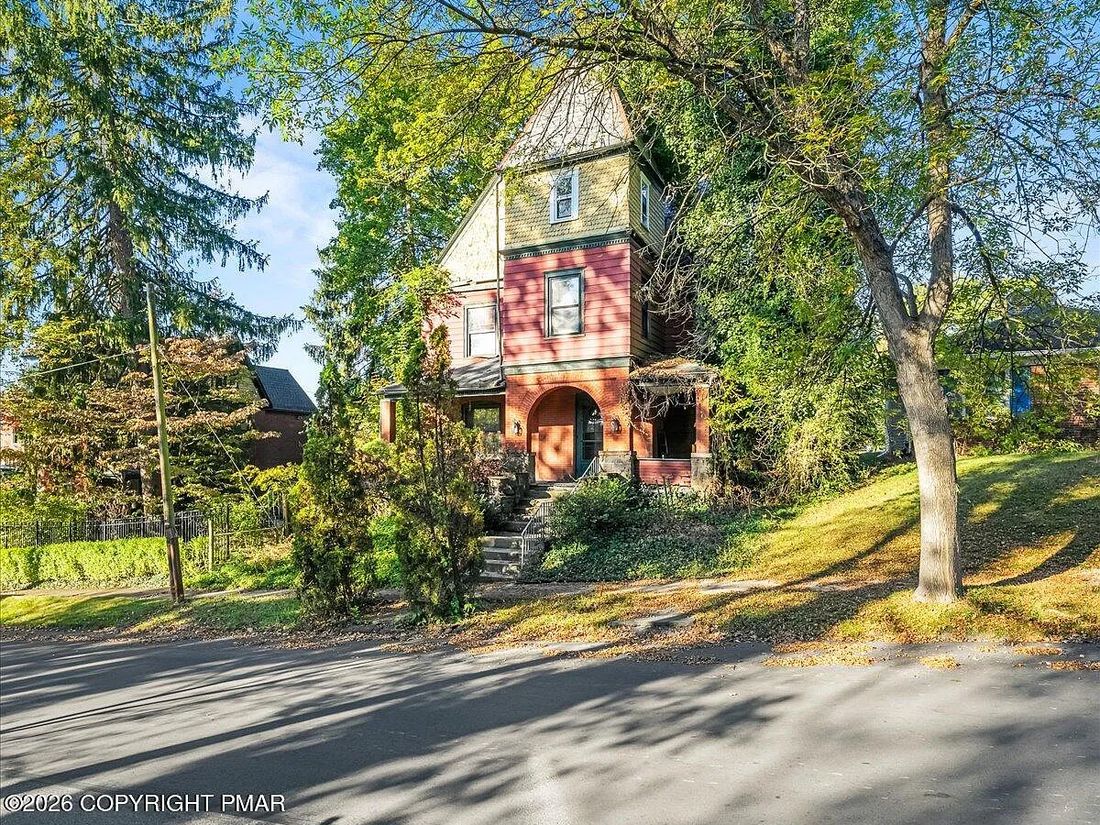
When we look at a house, we inspect it ourselves and we're buying it in whatever condition it's in. A defect you tell us about gets priced into the number once, at the front of the process. It doesn't become a renegotiation after an inspection report lands, it doesn't spook an underwriter, and it doesn't come back as a letter after closing. We bought a 1901 Victorian estate that had water in the basement, damage in the attic, and a failing kitchen ceiling — all of it disclosed, all of it priced in, and none of it a problem.
The only version of this that goes badly is the one where a seller stays quiet, hoping it won't come up. It always comes up. And an honest seller in a market like Wilkes-Barre or Scranton nearly always ends up with a cleaner, faster, more certain close than one who gambled.
If you want to see exactly how our process runs from first call to closing table, it's laid out step by step on How It Works, and there are straight answers to the questions sellers ask most on our FAQ page. Or just call (570) 433-9191 and tell us about the house — problems included. That conversation costs you nothing and it will tell you where you actually stand.
This article is general information about Pennsylvania law, not legal advice. Disclosure obligations turn on the specific facts of your property and your transaction. For guidance on your situation, speak with a licensed Pennsylvania real estate attorney.