
Inheriting a house in Scranton is rarely a simple windfall. Alongside the grief of losing a parent or relative, you're suddenly responsible for a property that may be hundreds of miles away, full of a lifetime of belongings, behind on taxes, or shared with siblings who don't agree on what to do. This guide walks NEPA families through the parts that actually matter: how probate works here in Lackawanna County, what Pennsylvania inheritance tax you'll owe, why the timing of a sale affects your taxes, and the three realistic ways to sell — with honest pros and cons for each.
Pennsylvania inheritance tax is charged on who inherits, not on how big the estate is. A child pays 4.5% and a niece pays 15% on the exact same house. Meanwhile, the home itself usually gets a "stepped-up" cost basis on the date of death — which often means little or no capital gains tax if you sell soon after. Understanding both of these before you list can change your net proceeds by thousands.
How Probate Works in Lackawanna County
Before an inherited house can be sold, someone needs the legal authority to sign the deed. In Pennsylvania, that authority comes from the county Register of Wills — for a Scranton-area estate, that's the Lackawanna County Register of Wills in the county courthouse. Here's the general sequence:
- Open the estate. The named executor (if there's a will) or a close relative (if there isn't) files with the Register of Wills to be appointed. With a valid will, the court issues Letters Testamentary; without one, it issues Letters of Administration. Either document is your legal proof that you can act for the estate — including selling real estate.
- Advertise the grant of letters. Pennsylvania requires the estate to be advertised once a week for three weeks in a local newspaper and the county legal journal, which starts the clock for creditors to come forward.
- Inventory and settle debts. The personal representative identifies assets, pays valid debts and final expenses, and files the inheritance tax return. Creditors generally have one year from the first advertisement to make claims.
- Sell or transfer the property. Once you hold Letters, you can sell the house and use the proceeds to pay estate debts and distribute to heirs — or deed it directly to the heirs if everyone agrees to keep it.
Full probate in Lackawanna County commonly runs several months to a year, depending on how complex the estate is and whether anyone contests it. Pennsylvania does offer a simplified small-estate process for estates with limited personal property (generally under $50,000, excluding real estate and certain costs), but most homes still move through the standard probate channel because real estate is involved.
You do not have to wait until the entire estate is closed to start selling. Many families accept an offer while probate is still open and simply schedule the closing for once Letters have been granted. Learn how the local process works on our sell an inherited house in Scranton page, or see a real example on our probate and lien double-property purchase in Wilkes-Barre.
Pennsylvania Inheritance Tax — What Heirs Actually Owe
Pennsylvania is one of a handful of states that still levies an inheritance tax, and it catches many families by surprise. The rate depends entirely on your relationship to the person who died. As of 2026, the rates are:
| Who Inherits | PA Inheritance Tax Rate |
|---|---|
| Surviving spouse | 0% |
| Child, grandchild, or parent (lineal heirs) | 4.5% |
| Sibling | 12% |
| Other heirs (niece, nephew, friend) | 15% |
A few practical points that matter when a house is part of the estate:
- The tax applies to the value of the inherited property, so a house is often the single largest taxable asset in an NEPA estate.
- The inheritance tax return is filed on Form REV-1500, and the tax is due nine months after the date of death.
- Pay within three months of the death and Pennsylvania grants a 5% discount on the tax owed — a real incentive to settle things promptly rather than letting the house sit.
Inheritance tax situations vary widely, and Pennsylvania amended parts of its inheritance tax code effective in 2026. Always confirm your specific numbers and deadlines with a licensed Pennsylvania estate attorney or accountant before you rely on them. The figures above are a general starting point, not a substitute for professional guidance.
Capital Gains and the Stepped-Up Basis
Here's the piece of good news that often offsets the inheritance tax worry. When you inherit a house, its cost basis is "stepped up" to the property's fair market value on the date of death — not what the original owner paid for it decades ago. That distinction is huge in a market like Scranton, where a home may have been bought for a fraction of today's value.
An example makes it concrete. Say your parents bought a South Side Scranton home for $40,000 in the 1980s, and it's worth $150,000 when they pass. If they had sold it themselves, they'd potentially owe capital gains on roughly $110,000 of appreciation. But because you inherited it, your basis resets to $150,000. Sell it shortly after for around that amount, and there's little to no taxable gain.
- Sell soon after inheriting and the sale price is usually close to the stepped-up basis, so capital gains are minimal.
- Hold the home for years and any appreciation above the date-of-death value can become a taxable gain when you eventually sell.
- Pennsylvania does not have a separate capital gains rate — any gain is taxed as ordinary income at the flat 3.07% state rate, on top of any federal capital gains tax.
Keep documentation of the property's value on the date of death (an appraisal or a broker price opinion) so your basis is well supported if the sale is ever questioned. And again — run the specifics past a tax professional.
Not Sure What the House Is Worth Today?
We'll give you a straight, no-obligation cash offer on an inherited Scranton or NEPA property — a useful data point even if you decide to list it.
Your Three Options for an Inherited Scranton Home
Once you have the legal authority to act, you have three realistic paths. There's no universally "right" one — it depends on the home's condition, whether heirs agree, and how much time and money you want to put in.
1. Keep It — Move In or Rent It Out
If the home is in good shape and an heir wants to live there, or you want the rental income, keeping it can make sense. Just go in with eyes open: you'll take on the property taxes, insurance, maintenance, and — if you rent it — landlord responsibilities across NEPA's older housing stock. Multiple heirs also have to agree on who manages it and how proceeds are split.
2. List It With a Realtor
A traditional listing can bring the highest sale price if the house is market-ready. The trade-off is time and money: inherited homes often need cleanout, repairs, and staging before they'll show well, and you'll carry the holding costs for the 60–90+ days a Scranton listing typically takes, plus agent commission at closing. If the house needs significant work, weigh whether the repairs pencil out — our guide on selling as-is versus renovating first in Scranton runs the real net-proceeds math.
3. Sell As-Is to a Local Cash Buyer
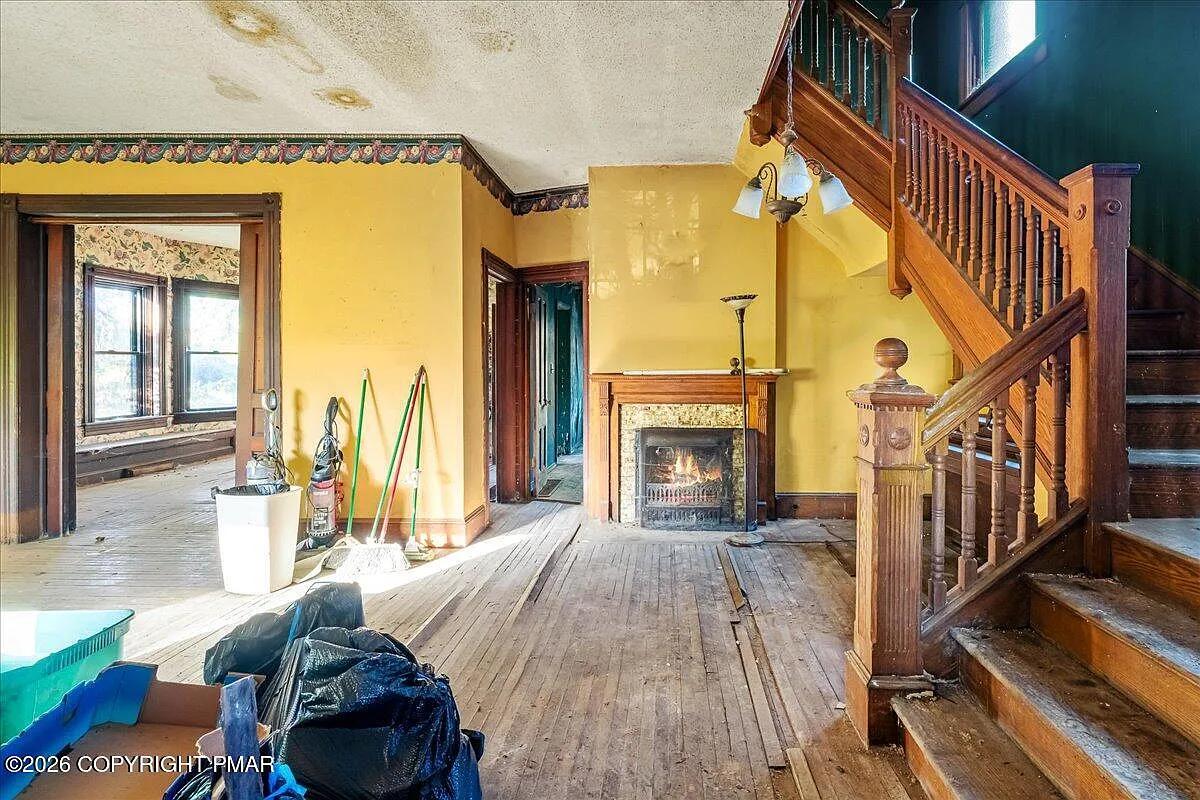
For many inherited properties — especially ones that are dated, full of belongings, out of state, or shared among heirs who just want a clean split — an as-is cash sale is the simplest path. There's no cleanout, no repairs, no showings, and no financing that can fall through, and the closing date can flex around your probate timeline. The trade-off is a below-retail price in exchange for speed and certainty. If you want to understand how that number is built, we break it down transparently in how cash home buyers calculate offers in Northeast Pennsylvania.
"The best option is the one that gets the whole family to 'yes' with the least stress — not always the highest sticker price."
— Frank Sanchez, Co-Founder, Simply Sold RECommon Complications — and How to Solve Them
Inherited homes rarely arrive clean. Here are the situations we see most often across Lackawanna and Luzerne counties, and how each is typically handled:
- Multiple heirs who disagree. Every owner on title generally has to sign at closing. A single agreed cash number and one closing date often ends the stalemate, because there's nothing left to argue over — no repair budget, no showings, no negotiating with a picky buyer.
- Delinquent property taxes or a lien. Unpaid taxes don't disappear, and in Pennsylvania they can eventually lead to a tax sale. They're usually paid off at closing from the proceeds. If the property is already behind, read our Lackawanna County tax sale guide so you know how much time you really have.
- An out-of-state heir. Managing a Scranton house from another state is expensive and exhausting. A local buyer can handle the property, coordinate a remote or mobile-notary closing, and take the home in whatever condition it's in.
- The house is full of belongings. You don't have to empty it. Take what's meaningful and leave the rest — a cash buyer clears it out after closing.
- The estate is still in probate. Common and manageable. We regularly coordinate around the grant of Letters. For an example of a legally complex estate sale we handled, see our power-of-attorney estate sale project.
How a Cash Sale Works for an Inherited NEPA Home
If you decide the cash route fits your family, the process is deliberately simple. You call us, we look at the property (in person or from photos if you're out of state), and you get a fair, no-obligation offer — usually within 24 hours. If you accept, we open title with a reputable local company, confirm the estate has the authority to sell, and set a closing date that works with your probate timeline. You pay no commissions and no closing costs, and you take only what you want from the house.
Call (570) 433-9191 or start online — even a short conversation will clarify where you stand. You can also see how our whole process runs on How It Works, and browse straight answers to common questions on our FAQ page. We've helped families across Scranton, Dunmore, Wilkes-Barre, and the surrounding counties turn a stressful inherited property into a clean, closed chapter.